
Views: 0 Author: Site Editor Publish Time: 2026-04-14 Origin: Site
What if your system could deliver fluid with perfect control every time? Many systems struggle with leaks, unstable flow, or poor accuracy. That is where micro magnetic gear pumps start to stand out.In this article, you will learn how micro magnetic gear pumps work and why they perform better than traditional options. We will also explore their key advantages, applications, and how to choose the right one.
A micro magnetic gear pump is a compact, high-precision pump designed for controlled fluid transfer. It uses a pair of intermeshing gears to move liquid in a steady, predictable manner. Instead of relying on traditional shaft seals, it uses magnetic coupling to transmit torque, which helps reduce leakage risks in sensitive systems.
From a structural point of view, these pumps are built for accuracy and durability. They are often used in systems where even small flow variations can affect performance. That is why industries like medical devices, liquid cooling, and laboratory equipment rely on them.
Key components of micro magnetic gear pumps include:
Gears (Driving & Driven): They rotate together, creating a fixed volume of fluid movement per cycle. This allows highly repeatable flow output, which is critical for dosing and metering tasks.
Magnetic Coupling: It transfers power without direct contact. This design removes the need for dynamic seals and significantly reduces wear over time.
Pump Housing: It encloses the internal system and supports pressure resistance. Materials can vary depending on fluid compatibility and operating conditions.
They are called “micro” because of their compact size and low flow range. They are called “magnetic” because they rely on magnetic force instead of direct shaft transmission. This combination makes them ideal for tight spaces and precision environments.
Magnetic drive technology changes how power is transmitted inside the pump. Instead of a rotating shaft passing through the housing, it uses magnets to drive the internal gears. This removes one of the most common failure points in traditional pumps.
In conventional designs, shaft seals are exposed to friction, pressure, and wear. Over time, they degrade and may allow fluid to escape. In contrast, a micro magnetic gear pump uses a sealed chamber with only static sealing elements, such as O-rings. This greatly improves sealing reliability.
Key differences between magnetic drive and traditional sealing systems:
No direct shaft penetration: The pump housing remains fully sealed, which helps prevent leakage in long-term operation.
Static vs dynamic sealing: Static seals experience less wear compared to moving seals, improving service life.
Reduced maintenance needs: Fewer mechanical wear points mean less frequent replacement and downtime.
Here is a clear comparison for better understanding:
| Feature | Magnetic Drive Pumps | Traditional Shaft Seal Pumps |
|---|---|---|
| Sealing Method | Static sealing (O-rings) | Dynamic shaft seals |
| Leakage Risk | Very low | Higher over time |
| Maintenance Frequency | Lower | Higher due to seal wear |
| System Cleanliness | Better for sensitive fluids | Risk of contamination |
Leak-free operation matters a lot in precision systems. It protects sensitive media, reduces environmental risks, and improves overall system reliability. In applications like medical dosing or chemical handling, even a small leak can cause serious issues.
The working principle of a micro magnetic gear pump is based on volumetric displacement. Each rotation of the gears moves a fixed amount of fluid from the inlet to the outlet. Because this volume is consistent, the flow rate can be accurately controlled by adjusting the speed.
This design allows the pump to deliver smooth, continuous, and low-pulsation flow. Unlike some pump types that produce fluctuating output, gear pumps provide a steady stream. That stability is important in processes where consistency directly affects performance.
Why this design supports precision:
Fixed displacement per revolution: It ensures predictable output, making flow easy to calculate and control.
Minimal pulsation: It reduces vibration and improves system stability, especially in sensitive equipment.
Wide operating range: It can handle different viscosities while maintaining stable flow behavior.
To visualize how flow stability compares, consider this:
| Flow Characteristic | Micro Magnetic Gear Pumps | Other Pump Types (General) |
|---|---|---|
| Flow Stability | Very stable, continuous | May fluctuate |
| Pulsation Level | Low | Medium to high |
| Flow Control Accuracy | High | Moderate |
In dosing and metering systems, stability is not optional. It directly impacts product quality, measurement accuracy, and system performance. That is why micro magnetic gear pumps are often chosen when precision is the top priority.
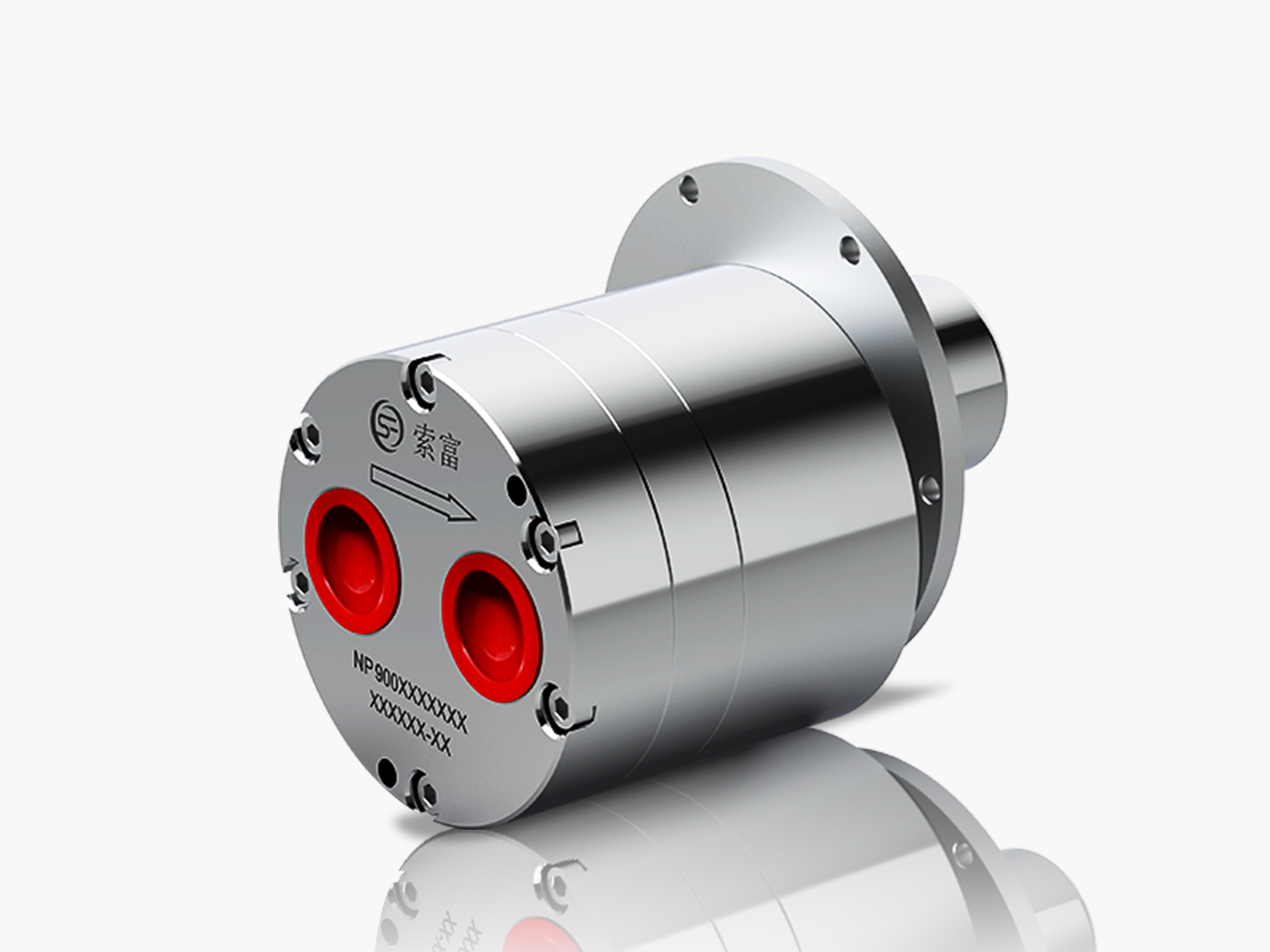
Micro magnetic gear pumps are designed for environments where accuracy is not optional. They deliver consistent flow because each gear rotation moves a fixed volume of liquid. This makes them highly reliable for applications where even small deviations can affect outcomes.
Key reasons they excel in precision applications:
High metering accuracy: Many systems can achieve up to ±0.1% accuracy, which supports strict dosing requirements. This is especially important in laboratory or medical systems where precision directly impacts results.
Excellent repeatability: Each cycle behaves the same, which ensures predictable system performance over time. This reduces calibration frequency and improves consistency.
Stable low-pulsation flow: Smooth flow helps avoid pressure spikes, making them suitable for analytical instruments and sensitive pipelines.
Leakage is one of the biggest concerns in fluid systems. Micro magnetic gear pumps address this issue by using a magnetic coupling system, which removes the need for dynamic shaft seals. This design keeps the fluid fully contained within the pump body.
Because there is no direct shaft penetration, the sealing system relies mainly on static elements. These components experience less wear, which improves long-term reliability. It also reduces the chances of sudden failure during operation.
Benefits of leak-free design in real applications:
Improved safety: It prevents exposure to hazardous or toxic fluids, which is critical in chemical and medical systems.
Protection of high-value media: It avoids loss of expensive liquids, especially in precision dosing or specialty fluid transfer.
Reduced maintenance requirements: Fewer wear parts mean less frequent servicing and lower downtime.
To better understand the impact, consider this comparison:
| Factor | Leak-Free Magnetic Design | Traditional Seal Design |
|---|---|---|
| Leakage Risk | Very low | Increases over time |
| Maintenance Frequency | Low | Higher |
| Operational Safety | High | Moderate |
| System Cleanliness | Maintained | Potential contamination risk |
Modern equipment is getting smaller, but performance expectations are increasing. Micro magnetic gear pumps are built to meet this demand. Their compact structure allows them to fit into tight spaces without sacrificing functionality.
This is especially important in integrated systems. Engineers often need to combine multiple components into a limited area. A smaller pump footprint makes design more flexible and efficient.
Why they work well in compact designs:
Small footprint: The pump body is designed to occupy minimal space, which supports high-density system layouts.
Lightweight structure: It reduces overall system weight, which is useful in portable or mobile equipment.
Flexible integration: It can be easily combined with motors, sensors, and control modules.
Typical applications include:
Medical devices requiring precise fluid delivery in limited space
Laboratory instruments with integrated fluid systems
Portable equipment where size and weight are critical factors
In these scenarios, compactness is not just a convenience. It directly affects system performance and usability.
One of the key strengths of micro magnetic gear pumps is their adaptability. They can handle a wide range of fluids and operating environments without losing performance stability. This makes them suitable for both standard and demanding applications.
Material selection plays a major role here. By using materials like PEEK, stainless steel, and ceramic, the pump can resist wear, corrosion, and temperature changes. This allows it to operate reliably across different conditions.
Key adaptability features include:
Wide viscosity compatibility: From low-viscosity liquids to thicker fluids, the pump maintains consistent flow behavior.
Temperature flexibility: It can operate in both low and high temperature environments depending on configuration.
Material customization: Different materials can be selected to match chemical compatibility and durability needs.
When we compare micro magnetic gear pumps to traditional gear pumps, the biggest difference shows up in how power is transmitted and how sealing is handled. Traditional gear pumps rely on a rotating shaft passing through the housing. Over time, this creates wear on the seal, and leakage becomes more likely.
Micro magnetic gear pumps solve this by using magnetic coupling instead of direct shaft transmission. It separates the motor from the fluid chamber. This design reduces mechanical stress and improves long-term reliability in demanding systems.
Key structural and performance differences include:
Magnetic drive system: It transfers torque without physical contact. This reduces friction and eliminates seal wear, making the pump more durable over time.
Sealing method: It uses static seals instead of dynamic ones. Static seals experience less stress, which improves sealing reliability in continuous operation.
Maintenance demand: It requires fewer interventions because there are fewer wear components inside the system.
To make this clearer, here is a structured comparison:
| Feature | Micro Magnetic Gear Pumps | Traditional Gear Pumps |
|---|---|---|
| Drive Method | Magnetic coupling | Direct shaft drive |
| Sealing Type | Static sealing | Dynamic shaft seal |
| Leakage Risk | Very low | Increases over time |
| Maintenance Frequency | Lower | Higher |
| Lifespan Stability | More consistent | Dependent on seal condition |
When comparing micro magnetic gear pumps to diaphragm and peristaltic pumps, the focus shifts from sealing to flow behavior and precision control. Each pump type has its own strengths, but the differences become clear in high-precision environments.
Micro magnetic gear pumps deliver continuous, low-pulsation flow. In contrast, diaphragm and peristaltic pumps typically produce pulsating output due to their operating principles. This pulsation can affect measurement accuracy and system stability.
Key advantages over alternative pump types:
Flow stability: Gear pumps provide smoother flow. It reduces vibration and improves consistency in sensitive processes.
Precision control: Flow rate can be adjusted directly through speed control. This allows finer tuning in dosing applications.
Lower pulsation impact: It minimizes pressure fluctuations, which is critical in analytical and metering systems.
At the same time, it is important to understand the limitations of alternatives:
Diaphragm pumps are often better for handling highly abrasive or particulate fluids, but they sacrifice flow smoothness.
Peristaltic pumps are simple and easy to maintain, yet they tend to have lower precision and higher pulsation.
Here is a direct comparison:
| Pump Type | Flow Stability | Pulsation Level | Precision Control | Typical Limitation |
|---|---|---|---|---|
| Micro Magnetic Gear | Very stable | Low | High | Limited for large flow volumes |
| Diaphragm Pump | Moderate | Medium | Moderate | Pulsation affects accuracy |
| Peristaltic Pump | Lower | High | Lower | Tubing wear and flow inconsistency |
Choosing the right pump depends on the application, not just specifications. Micro magnetic gear pumps are best suited for scenarios where precision, sealing, and compact design are critical. They are not always the highest flow option, but they perform well when control matters more than volume.
In many industries, engineers prioritize stability over raw output. That is where these pumps stand out. They allow better system control and reduce the risk of process errors.
Typical application scenarios include:
Precision dosing systems: Where exact fluid volume must be delivered repeatedly without variation.
Medical and laboratory equipment: Where clean, leak-free operation is essential for safety and accuracy.
Liquid cooling systems: Where stable circulation improves thermal performance and system reliability.
When deciding whether to use this type of pump, engineers often consider:
Is flow accuracy more important than flow rate? If yes, this pump type becomes a strong candidate.
Is leakage unacceptable in the system? Magnetic drive design provides a clear advantage here.
Is the installation space limited? Compact size allows easier integration into tight systems.
Micro magnetic gear pumps are widely used in industries where precision, cleanliness, and reliability are essential. They are not limited to one field. Instead, they serve multiple sectors where fluid control must stay stable over long periods.
In medical and pharmaceutical systems, these pumps help deliver accurate dosing and controlled fluid transfer. It matters when handling sensitive liquids. Even small deviations can affect results. Their leak-free structure also improves safety during operation.
In new energy and liquid cooling systems, they support stable circulation of coolant fluids. It helps maintain temperature control in battery systems or electronic components. When flow becomes unstable, heat management suffers. That is why consistency matters here.
In industrial automation and semiconductor processes, they are used for precise chemical transfer and process control. These environments often require clean, contamination-free systems. Stable flow ensures process repeatability.
In laboratory and analytical equipment, they support sampling and fluid analysis tasks. Accuracy plays a direct role in measurement quality. Small, consistent flow makes them suitable for compact instruments.
Typical applications at a glance:
| Industry Sector | Typical Use Case | Why Micro Magnetic Gear Pumps Fit |
|---|---|---|
| Medical & Pharma | Drug delivery, dosing systems | High accuracy, leak-free design |
| New Energy & Cooling | Liquid cooling circulation | Stable flow, continuous operation |
| Semiconductor & Industry | Chemical transfer, process control | Clean, precise, reliable |
| Laboratory Equipment | Sampling, analytical fluid handling | Compact, accurate flow control |
Selecting the right micro magnetic gear pump is not just about picking a model. It involves understanding how the pump interacts with the system. Each application has its own requirements, so choosing carefully can improve performance and lifespan.
One of the first things to look at is flow rate and pressure. The pump must match system demand. If the flow is too low, performance suffers. If it is too high, control becomes difficult. Pressure capability also affects how well the pump handles resistance in the system.
Another key factor is fluid properties. Different liquids behave differently. Some are thin and easy to move. Others are viscous or corrosive. The pump must be able to handle these conditions without losing efficiency or causing damage.
Material compatibility is also important. The internal components must resist wear and chemical reactions. This is where materials like stainless steel, PEEK, or ceramic come into play. Choosing the wrong material can lead to failure over time.
Key selection considerations include:
Flow and pressure requirements: They determine pump size and operating range. It helps ensure stable system performance under different conditions.
Fluid characteristics: Viscosity, temperature, and chemical composition affect pump behavior. Matching these factors improves reliability.
Material compatibility: It protects internal components from corrosion or wear. This extends service life and reduces maintenance needs.
When these factors align properly, the pump performs more efficiently and lasts longer in real-world use.
In many applications, standard pumps are not enough. Systems often require specific performance adjustments or structural changes. This is where customization becomes important. It allows the pump to match the system instead of forcing the system to adapt.
Customization can involve flow control tuning, structural design changes, or integration into a larger system. It helps improve efficiency and reduces the risk of mismatch between components. For example, adjusting gear size or motor configuration can directly influence flow precision.
Manufacturers like Suofu offer OEM and ODM services, which means they can develop solutions based on project requirements. This includes system-level integration, not just individual pump supply. It makes the pump part of a complete fluid control solution.
Common customization approaches include:
System integration: Combining the pump with sensors, controllers, or drive units. This creates a more compact and efficient system.
Performance optimization: Adjusting flow rate, pressure range, or operating speed to match application needs.
Material and structure adaptation: Selecting materials and designs based on fluid type and environment.
Customization also improves long-term reliability. When the pump is designed for the exact application, it reduces stress on components. It also helps avoid issues like cavitation or inefficient operation.
Micro magnetic gear pumps offer precise flow, stable output, and leak-free performance. They fit compact systems and handle various fluids well. Suofu provides advanced designs and customization, helping users achieve reliable fluid control and long-term value.
A: Micro magnetic gear pumps are used for precise dosing, cooling, and fluid transfer in medical, lab, and industrial systems.
A: Micro magnetic gear pumps reduce leakage and improve accuracy, making them better for sensitive and controlled applications.
A: Micro magnetic gear pumps use gear rotation for fixed displacement, which keeps flow steady and consistent.
A: Yes, micro magnetic gear pumps handle various viscosities and materials, supporting many working conditions.
A: Choose based on flow rate, pressure, and fluid type to match system needs effectively.


