
Views: 0 Author: Site Editor Publish Time: 2026-04-14 Origin: Site


Are you struggling to achieve stable and accurate flow in low-flow systems? A micro gear pump offers a reliable solution, but selecting the right one requires careful consideration of several factors. In this article, you will learn how micro gear pumps work and what to evaluate when choosing the best option for your application.
A micro gear pump is a compact positive displacement pump designed for precise, low-flow fluid transfer. It works by trapping a fixed volume of liquid between rotating gears and the pump housing, then moving it steadily from inlet to outlet. Because each rotation delivers a consistent amount of fluid, it becomes highly reliable in applications where accuracy matters more than volume.
Compared to standard gear pumps, micro gear pumps are built for precision rather than bulk transfer. They use tighter tolerances, smaller internal clearances, and often more advanced materials. This makes them suitable for sensitive systems such as dosing equipment, cooling loops, or analytical instruments. In many real-world scenarios, they are chosen not because they move more fluid, but because they move it better.
Below is a simple comparison to help clarify the differences:
| Feature | Standard Gear Pump | Micro Gear Pump |
|---|---|---|
| Flow Range | Medium to high flow | Very low to low flow |
| Precision Level | Moderate | High (fine metering capability) |
| Size | Larger footprint | Compact and integration-friendly |
| Typical Applications | Industrial transfer | Dosing, cooling, medical, lab systems |
| Control Capability | Basic | Highly controllable and stable |
Because of these characteristics, a micro gear pump becomes the preferred option when the system requires controlled, consistent, and repeatable flow instead of volume throughput.
At its core, a micro gear pump operates on a positive displacement principle. This means it moves fluid by capturing a fixed volume and physically pushing it through the system. Unlike centrifugal pumps, it does not rely on velocity or pressure changes. Instead, it ensures that every rotation produces a predictable output.
Here is how the process typically works:
Fluid enters the pump through the inlet side.
Rotating gears trap the liquid between gear teeth and the housing.
The fluid is carried around the outer edges of the gears.
It is then pushed out at the outlet under controlled pressure.
This mechanism allows the pump to maintain steady flow even under varying system conditions. It also makes it easier to adjust flow rate simply by changing the rotation speed.
One important detail is the relationship between speed and flow. When the motor speed increases, the flow rate rises proportionally. When it slows down, the output decreases smoothly. This linear relationship makes micro gear pumps ideal for systems that require fine adjustments and precise control.
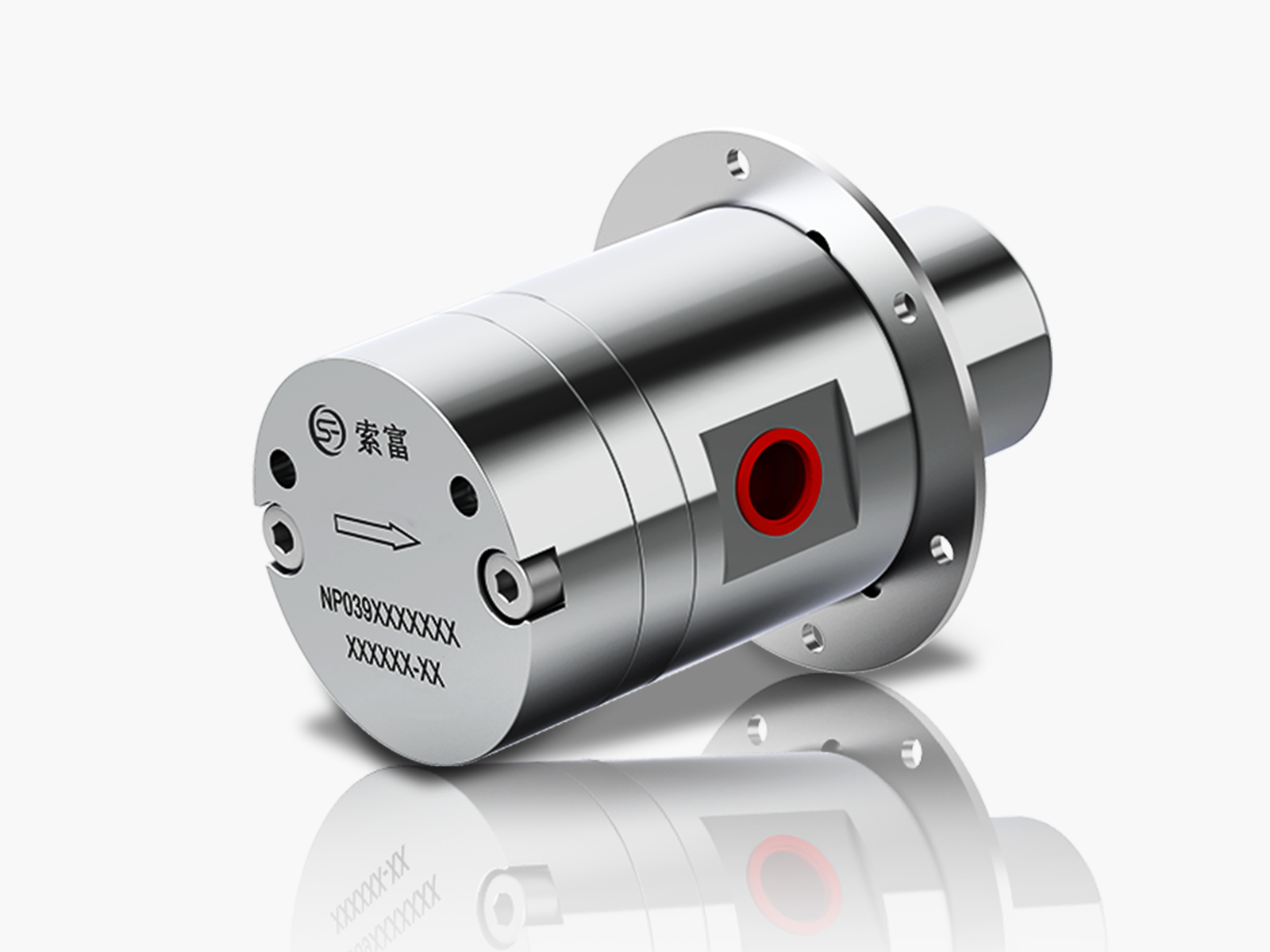
A micro gear pump stands out because it delivers a fixed amount of fluid per rotation. This creates predictable output and makes control straightforward. In low-flow systems, even small deviations can cause noticeable errors. Precise control becomes essential in dosing, metering, and analytical processes.
In practical use, several advantages become clear:
Consistent flow output across long operation cycles. Stable performance reduces variation over time. This helps maintain accuracy in continuous processes.
Fine adjustment through motor speed control. Flow rate increases or decreases in direct proportion to rotation speed. This allows precise calibration during system setup.
Reduced process variation in sensitive applications. Stable flow improves quality in chemical dosing and laboratory testing. Small fluctuations are less likely to affect results.
Below is a quick comparison of how precision influences different applications:
| Application Type | Why Precision Matters | Result with Micro Gear Pump |
|---|---|---|
| Chemical dosing | Exact ratio control | Stable mixture quality |
| Laboratory analysis | Consistent sample volume | Reliable test results |
| Cooling systems | Controlled coolant flow | Stable thermal performance |
Flow pulsation can disrupt system performance in low-flow environments. Pressure fluctuations may lead to unstable readings or mechanical stress. A micro gear pump minimizes these issues by delivering fluid in a continuous, smooth manner.
Instead of pushing fluid in cycles, the pump maintains steady movement along the gear path. This ensures more uniform pressure and reliable output.
Reduced vibration in pipelines and connected components. Lower mechanical stress helps extend system lifespan. Equipment runs more quietly and efficiently.
Improved stability for sensitive processes. Smooth flow supports accurate measurements and consistent dosing. This is especially important in precision systems.
Higher operational efficiency. Stable flow reduces the need for correction mechanisms. Energy consumption becomes more predictable.
A micro gear pump offers strong self-priming capability, allowing fluid intake without external assistance. This simplifies system design and improves startup reliability. In real operating conditions, fluid supply and pressure often change. Stable performance becomes critical.
Performance advantages in variable environments include:
Reliable operation during intermittent use. Start-stop cycles do not significantly affect efficiency. This suits systems with irregular operation patterns.
Stable flow under changing pressure conditions. Output remains consistent even when system load varies. This prevents unexpected performance drops.
Adaptability to diverse working environments. From compact devices to industrial systems, performance remains dependable.
Leak prevention is essential in low-flow systems, especially when handling sensitive fluids. A micro gear pump often uses a magnetic drive design, eliminating traditional dynamic seals. This significantly lowers the risk of leakage during operation.
This design approach improves both safety and system reliability.
Minimal leakage risk during long-term operation. Fluid containment remains secure even under continuous use. This is critical in chemical and medical environments.
Lower maintenance requirements. Fewer wearable sealing components reduce the need for frequent servicing. System downtime is minimized.
Cleaner and safer process conditions. Reduced leakage helps maintain fluid purity and environmental safety. This is important in high-standard industries.
Comparison of sealing methods:
| Sealing Method | Leakage Risk | Maintenance Requirement |
|---|---|---|
| Mechanical seal | Medium | Regular inspection needed |
| Packing seal | Higher | Frequent adjustment needed |
| Magnetic drive | Very low | Minimal maintenance |
A major strength of a micro gear pump is its ability to handle a wide range of fluids under different conditions. In real applications, fluids are rarely uniform. Viscosity, temperature, and chemical composition often vary, so adaptability becomes essential for stable operation.
Micro gear pumps are designed to work across diverse fluid types. Tight internal tolerances and material selection allow them to maintain performance even when fluid properties change.
Handling low to high viscosity fluids. Performance remains stable from very thin liquids to thicker oils. This helps maintain efficiency without frequent adjustments.
Compatibility with various chemical properties. Corrosive and reactive fluids can be managed when proper materials are selected. This ensures longer system life and safer operation.
Support for multiple industrial media types. Oils, coolants, solvents, and specialty fluids can all be transferred reliably. This flexibility reduces the need for multiple pump types.
Below is a simple overview of fluid compatibility:
| Fluid Type | Typical Challenge | Micro Gear Pump Advantage |
|---|---|---|
| Low-viscosity fluids | Leakage and instability | Tight sealing improves control |
| High-viscosity fluids | Flow resistance | Strong displacement capability |
| Chemical fluids | Corrosion risk | Material selection ensures safety |
| Coolants | Temperature variation | Stable operation across ranges |
Manufacturers such as Suofu design their micro gear pump systems to handle viscosity ranges and temperature variations effectively. This allows engineers to use a single solution across multiple applications.
Modern systems often require compact components. Space is limited in equipment such as medical devices, laboratory instruments, and automated machinery. A micro gear pump offers a small footprint while maintaining strong performance.
Compact design does not reduce functionality. Instead, it improves system integration and flexibility during equipment design.
Space-saving structure for tight installations. Small dimensions allow placement in confined areas. This simplifies layout design in compact systems.
Lightweight construction for easier assembly. Reduced weight supports portable or mobile equipment designs. Installation becomes faster and more efficient.
Compatibility with integrated systems. Pumps can be combined with motors, controllers, or sensors. This helps streamline system architecture.
A compact micro gear pump supports modern engineering trends where efficiency and miniaturization are both priorities.
Durability plays a key role in selecting a micro gear pump. Frequent maintenance increases cost and disrupts operations. High-quality pumps are designed to run continuously while minimizing wear.
Material selection and structural design directly affect service life. Precision components reduce friction and improve long-term reliability.
Wear-resistant internal components. Materials such as ceramic shafts and hardened gears reduce mechanical wear. This extends operational lifespan significantly.
Stable performance over extended periods. Consistent flow output reduces system recalibration needs. This keeps processes running smoothly.
Lower maintenance frequency. Fewer moving parts and robust design reduce failure rates. Maintenance intervals become longer and more predictable.
Every application has unique requirements. Standard solutions may not always meet system needs. A micro gear pump offers strong customization capability, making it easier to adapt to specific operating conditions.
Customization allows engineers to optimize performance without redesigning the entire system. This improves efficiency and reduces development time.
Adjustable flow rate and pressure parameters. Pump performance can be tuned to match exact process requirements. This ensures better system control.
Flexible material and component selection. Different materials can be used for compatibility with specific fluids. This improves durability and safety.
Integration with control systems and automation. Pumps can be paired with sensors, controllers, or variable-speed drives. This supports advanced automation and monitoring.
A micro gear pump is widely used in dosing and metering systems where accuracy is critical. In these environments, even a slight variation in flow can affect the final result. That is why stable and repeatable delivery becomes essential for process control.
In chemical injection systems, precise ratios must be maintained over long periods. A micro gear pump ensures consistent output, helping avoid over- or under-dosing. In laboratory and analytical equipment, small volumes must be handled carefully to ensure valid test results.
Chemical injection systems require controlled dosing accuracy. Stable flow helps maintain correct chemical concentration over time. This improves process reliability in industrial and environmental applications.
Laboratory equipment depends on repeatable sample delivery. Consistent flow reduces measurement errors and supports reliable analysis. This is especially important in research and testing environments.
Micro-scale processes benefit from predictable output behavior. Fixed displacement allows precise control without complex adjustments. This simplifies system calibration.
Typical use cases include:
| Application Type | Key Requirement | Role of Micro Gear Pump |
|---|---|---|
| Chemical dosing | Accurate ratio control | Stable and repeatable flow |
| Analytical instruments | Precise sample handling | Consistent micro-volume transfer |
| Process metering | Continuous flow monitoring | Predictable output behavior |
Cooling systems often operate under low-flow conditions where stability is more important than volume. A micro gear pump supports smooth circulation, helping maintain consistent temperature across components.
In electronics and battery systems, overheating can reduce performance or cause damage. Controlled coolant flow ensures efficient heat transfer. In refrigeration and thermal management, stable circulation improves system efficiency and reduces energy waste.
Liquid cooling systems rely on stable flow rates. Consistent coolant delivery helps maintain uniform temperature across sensitive components. This improves reliability in electronics and battery modules.
Thermal management systems require continuous circulation. Smooth flow prevents hotspots and supports efficient heat exchange. This is critical in compact and high-performance equipment.
Low pulsation improves system efficiency. Reduced flow fluctuation helps maintain steady pressure and better cooling performance.
Manufacturers like Suofu often design micro gear pump solutions for liquid cooling applications, ensuring compatibility across different fluids and temperature ranges.
Medical and pharmaceutical systems demand strict control over fluid handling. A micro gear pump is often used because it supports accurate transfer in sterile and controlled environments. Clean operation and reliability are key requirements in these fields.
In medical devices, fluid delivery must be precise and consistent. Any variation can affect treatment outcomes or diagnostic accuracy. In pharmaceutical production, maintaining contamination-free processes is critical.
Medical devices require precise fluid control. Accurate delivery supports functions such as infusion, sampling, and diagnostics. Consistency improves patient safety and system performance.
Sterile environments demand leak-free operation. Magnetic drive designs reduce contamination risk and maintain system integrity. This is essential in sensitive applications.
Pharmaceutical processes need reliable dosing systems. Stable flow ensures correct formulation and production quality.
In advanced industrial systems, low-flow precision is often required for specialized processes. A micro gear pump supports these needs through stable performance and adaptability to complex conditions.
Semiconductor manufacturing involves handling ultra-clean fluids in controlled environments. Even minor fluctuations can affect production quality. In fuel cells and new energy systems, precise fluid delivery supports efficient chemical reactions and system performance.
Semiconductor processes require ultra-stable fluid control. Precise delivery ensures consistent production quality. Clean handling reduces contamination risk.
Fuel cell systems depend on accurate fluid supply. Controlled flow improves energy efficiency and system reliability.
High-tech equipment benefits from compact and precise components. Micro gear pumps support integration into advanced systems.
Choosing the right micro gear pump depends on precision, stability, and fluid compatibility. It supports accurate flow, smooth delivery, and reliable operation in many systems. Suofu provides high-precision, leak-free micro gear pump solutions, along with flexible customization to meet different application needs and improve overall system performance.
A: A micro gear pump is used for precise low-flow transfer in dosing, cooling, and laboratory systems.
A: A micro gear pump offers stable, accurate flow and low pulsation, which improves system control.
A: Flow rate in a micro gear pump changes with motor speed, allowing easy and precise adjustment.
A: A micro gear pump can handle oils, chemicals, and coolants across different viscosities.
A: A micro gear pump has fewer wear parts, which helps reduce maintenance and downtime.


